

Research Strength and Key Laboratories
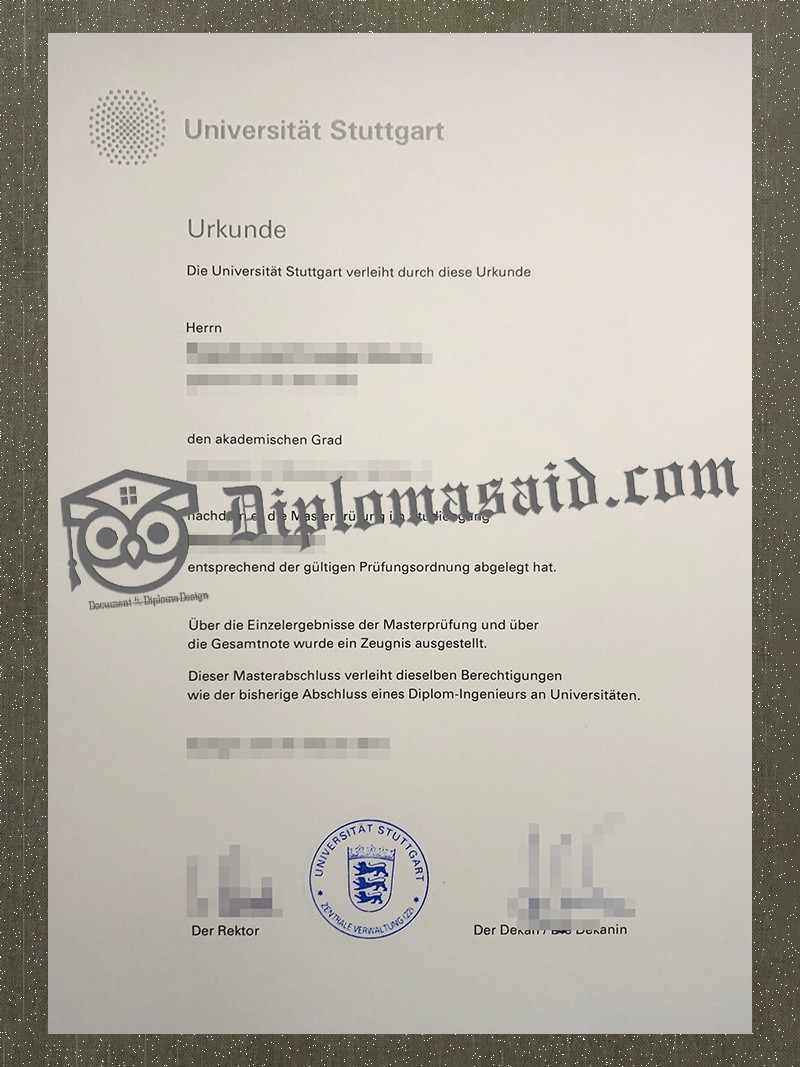
The university is a long-standing recipient of funding under Germany’s “Exzellenzprogramm” (Excellence Initiative) and is home to two clusters of excellence: Data-Integrated Simulation Science (SimTech) and Integrated Computational Design and Construction in Architecture (IntCDC). Its Stuttgart High-Performance Computing Center (HLRS) is one of Europe’s most powerful supercomputing facilities, serving a wide range of fields including automotive crash simulation, climate research, and biomechanics. As a result, many of students’ daily assignments and theses stem directly from cutting-edge research projects; this deep integration of research and practice is unique among German universities. Universität Stuttgart Urkunde Rankings in the Global Talent Pool
Campus Location and Transportation
The main campus is located in Vaihingen, an inner-city district of Stuttgart, seamlessly connected to the Pfaffenwald Research Park and surrounded by R&D centers of companies such as Daimler, Bosch, and IBM. Campus life is very convenient, with S-Bahn lines S1, S2, and S3 providing direct access to the campus; the journey from the city center to the classrooms takes only about 10 minutes. This “city-center research” model allows students to switch between classes and internships at leading companies with virtually no commute, significantly reducing time costs.
International Student Support Services
The university is highly international, with international students making up about 20% of the student body and hailing from over 120 countries. The International Student Office (IZ) provides a full range of services, from visas, housing, and enrollment to cross-cultural training. A particularly notable feature is the “Starter Package” program, in which upperclassmen serve as mentors to help new students handle administrative tasks—such as dorm applications and registration at city hall—before they even arrive, while also organizing city exploration activities, ensuring that studying abroad is no longer a solitary adventure.
Why Is It So Popular?
The University of Stuttgart’s immense popularity can be attributed to three key factors:
- Industry-Integrated Education: Over 80% of master’s theses in engineering are based on real-world projects from companies, ensuring graduates possess the practical skills of seasoned engineers upon graduation.
- Excellent return on investment: Although the state of Baden-Württemberg charges tuition fees for non-EU students (1,500 euros per semester), thanks to the region’s robust automotive and precision manufacturing clusters, over 90% of graduates find employment within three months, with starting salaries generally exceeding 50,000 euros.
- The “Elite University” Reputation: Consecutive selection for Germany’s “Excellence Initiative” gives the university’s degree greater weight in the job market, making it regarded as a “safe bet” for studying science and engineering abroad.
Scholarships and Financial Aid System
Although the state charges tuition for international students, financial support is diverse and practical:
- German Academic Exchange Service (DAAD) Scholarships: Full master’s scholarships and research stipends for students from developing countries.
- B DeutschlandstipendiumB : A corporate-sponsored scholarship of 300 euros per month; students awarded this scholarship also have the opportunity to join the sponsoring company’s mentor network.
- On-campus part-time jobs and research assistantships (HiWi): Thanks to extensive research institute and industry partnerships, students find it far easier to secure paid research positions here than in other cities; most STEM students can fully cover their living expenses through HiWi positions alone.