

In the dazzling constellation of global higher education, Humboldt University of Berlin (Humboldt-Universität zu Berlin), located in the German capital, is undoubtedly a towering beacon of scholarship. As a public, comprehensive research university, it is not only a key member of Germany’s Elite Universities but is also revered worldwide as the “Mother of the Modern University” due to its profound influence on the global education system.
The Humboldt Philosophy: Laying the Foundation for Modern Universities Worldwide
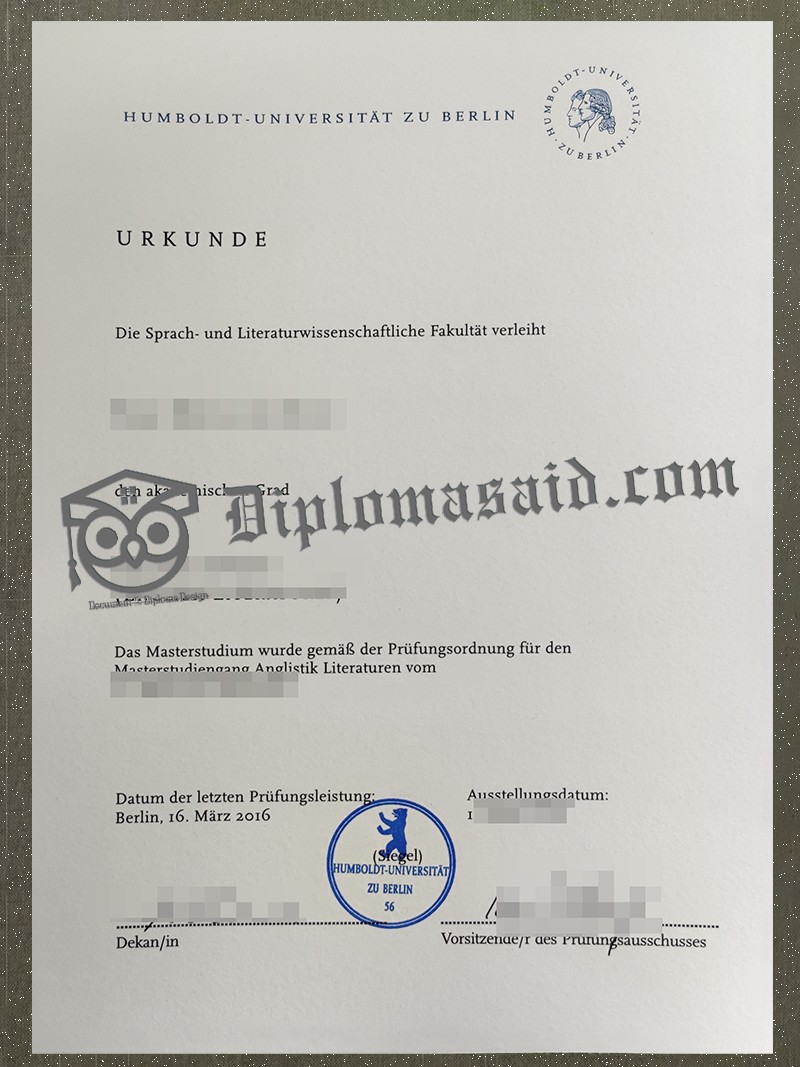
Humboldt University of Berlin traces its origins to the University of Berlin, founded in 1810 by the renowned educational reformer Wilhelm von Humboldt. From its very inception, Humboldt established the epoch-making principles of “the integration of teaching and research” and “academic freedom.” Prior to this, most European universities had followed the monastic tradition, focusing primarily on training civil servants or clergy. Humboldt University broke free from these constraints, defining the university as the “sum of knowledge” (Universitas litterarum) and making the pursuit of pure knowledge and scholarship its ultimate goal. This revolutionary concept subsequently crossed national borders, spreading throughout Europe and the Americas, and profoundly influenced the educational models of numerous top-tier universities worldwide, including Johns Hopkins University in the United States. Earning this Humboldt Universitat Urkunde represents a major milestone in my personal growth.
A Constellation of Stars: Nurturing Intellectual Giants Who Changed the World
For more than two hundred years, Humboldt University of Berlin has been a global center of scholarship, nurturing many intellectual giants who have shaped the course of human history. In the fields of philosophy and the humanities, Hegel, Schopenhauer, Marx, and the poet Heine all studied or taught here; in the natural sciences, physics giants such as Einstein, Planck, and Schrödinger also left their indelible mark here. According to statistics, the university has produced numerous Nobel laureates throughout its history, a testament to its truly remarkable academic strength.
Academic Excellence: Consistently Ranked Among the World’s Top 100
Today, Humboldt University boasts an outstanding profile of “strength in both the humanities and sciences.” In the humanities, its traditional strengths—such as law, philosophy, and history—enjoy an extremely high international reputation; in the natural sciences, fields like physics, neuroscience, and life sciences are equally at the forefront of the global academic landscape. Additionally, the Charité University Hospital, which the university shares with the Free University of Berlin, is Europe’s largest and most prestigious integrated center for medical education, research, and clinical care. In authoritative rankings, Humboldt University firmly holds a position among the world’s best, ranking 47th globally in the 2026 U.S. News World University Rankings, a testament to its strong comprehensive research capabilities.
International Campus: An Ideal Haven for Students Worldwide
As a highly international institution, Humboldt University of Berlin has approximately 34,000 enrolled students, with international students accounting for nearly 20% of the student body, fostering an open and diverse academic atmosphere. Regarding language requirements, most traditional programs are taught in German and typically require applicants to have a C1 level of German proficiency; at the same time, the university also offers master’s programs taught entirely in English, such as Data Science and International Business Law, making it very welcoming to international students from around the world. The main campus is located on the famous Unter den Linden in central Berlin, adjacent to the Museum Island—a UNESCO World Heritage Site—offering a rich cultural atmosphere and excellent transportation access.