

The economy and culture of the city
Clervaux is a medieval city with a long history, and it has been the capital of the eponymous country since the 11th century. Today, with a population of about 53,000, it is the capital of clervaux County. The city is famous for its historical gardens and parks designed by Prince John Moritz in the 17th century.
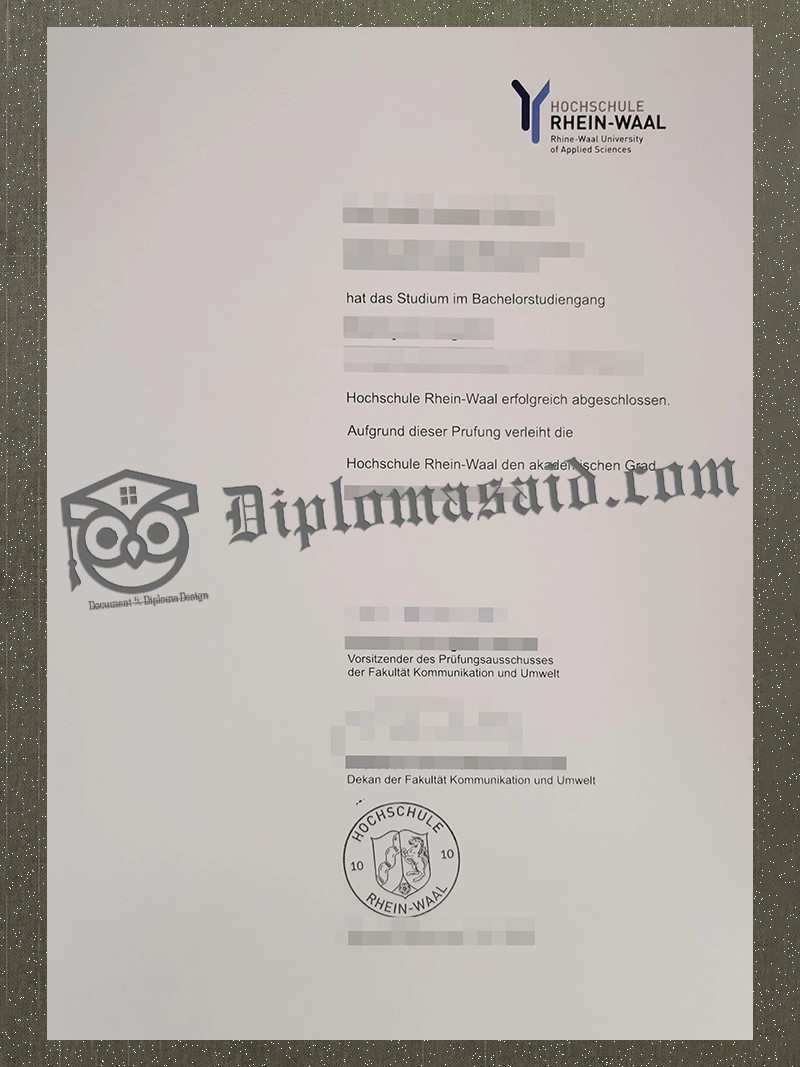
Clervaux has a diversified economic structure of small and medium-sized enterprises, located on the border of Germany and Holland, and is the economic and cultural center of Lower Rhine. Rhine-Valle University is the most important higher education institution in this city, which provides strong talents and scientific research support for local economic and social development. Find out how studying at Hochschule Rhein-Waal Diploma changed my career, opened the door to international job opportunities, and enabled me to advance rapidly in my career in Germany.
College structure and degree setting
The school has four colleges:
| Faculty | Campus | Core Areas |
|---|---|---|
| School of Technology and Bionics | Clever | Bionics, Engineering, Sustainable Engineering |
| School of Life Sciences | Clever | Life Sciences, Health Sciences |
| School of Social and Economic Sciences | Cleve | International Business, Social Sciences, Economics |
| School of Communication and Environment | Kam-Lintfort | Communication, Environmental Science |
The university currently offers 25 undergraduate programs and 11 master’s programs. Starting in the winter semester of 2025/26, the School of Technology and Bionics will introduce three new undergraduate programs: “Engineering,” “Sustainable Engineering,” and “Bionic Materials.” Approximately 75% of courses are taught in English, and the School of Social and Economic Sciences offers all of its undergraduate and master’s programs entirely in English.
Faculty: Close Faculty-Student Relationships
As a young university of applied sciences, Rhein-Waal places a strong emphasis on small class sizes and close faculty-student relationships. The university boasts a young, passionate, and approachable team of professors and lecturers—professors address students by their first names, and students can interact closely with faculty in small-class settings. The university has approximately 7,000 students and 550 staff members, 27% of whom are international, hailing from 30 different countries.
Research Strength: From 3D Printing to Biomimetic Robotics
As a university of applied sciences, Rhein-Waal places particular emphasis on interdisciplinary, highly practice-oriented applied research. The university is equipped with numerous well-equipped laboratories covering a range of cutting-edge fields, from 3D printing and virtual reality to robotics.
The Centre for Biomimetic and Natural Technologies is a multidisciplinary research center dedicated to developing tools and machines for complex dynamic environments; the Agroforestry Living Laboratory collaborates with local farmers to explore cutting-edge sustainable practices; and the Center of Competence at the School of Social and Economic Sciences (ccaer) focuses on empirical methods in applied economic research. The university also operates the Center for Research, Innovation, and Transfer, which provides researchers with comprehensive support for grant applications and doctoral scholarships.
Sustainability and the Green Campus
Sustainability is one of Rhein-Waal University’s core strategies. The university’s “Sustainable Campus” Innovation Sprint is student-led and has generated proposals such as a university garden, composting facilities, food donations from the cafeteria, and rooftop greening.
The new “Sustainable Engineering” undergraduate program, launched in the winter semester of 2025/26, employs project-based learning, allowing students to tackle real-world problems in laboratories from their very first day on campus. The Green FabLab of the School of Communication and Environment, located in the “Zechenpark” campus, focuses on digital production and sustainability. The university’s research is guided by the United Nations Sustainable Development Goals and is committed to contributing to global challenges such as climate change.