

School Structure and Degree Programs
Rutgers University comprises 29 schools spread across its three main campuses in New Brunswick, Newark, and Kenton, offering more than 150 undergraduate majors and over 400 master’s and doctoral programs. The university ranks among the top public universities in the United States in terms of the comprehensiveness of its academic disciplines. The main campus in New Brunswick is home to core schools such as the School of Engineering, the Ernest Mario School of Pharmacy, and the Rutgers Business School, with outstanding academic reputations in pharmacy, computer science, and philosophy. The Newark campus emphasizes law, criminal justice, and business practice, while the Kenton campus focuses on public affairs studies. The university supports cross-departmental course selection and interdisciplinary programs to accommodate students’ individualized academic needs.
Admissions Policies and Criteria
The university implements a test-optional policy for undergraduate admissions. Language requirements for international students are a TOEFL score of 79 or an IELTS score of 6.5, with higher thresholds for popular programs such as pharmacy and nursing. Admitted students have an average GPA of approximately 3.5, and the university conducts a comprehensive evaluation of high school course difficulty, personal statements, and extracurricular activities. Admission standards vary significantly across graduate programs. For engineering and business programs, applicants are generally advised to submit GRE or GMAT scores, with a minimum TOEFL score of 83 and an undergraduate GPA of at least 3.0. The regular application deadline for graduate programs is April 15 each year, though some programs operate on a rolling admissions basis; the application process is open and transparent.
Industry Partnerships and On-Campus Recruitment
Leveraging its strategic location in the New York and Philadelphia metropolitan areas, Rutgers University has established deep partnerships with over 100 Fortune 500 companies, including Johnson & Johnson, Pfizer, Google, and Amazon. The university hosts multiple large-scale on-campus career fairs each year, where companies conduct presentations and direct hiring on campus. Programs such as Supply Chain Management, Computer Science, and Business offer paid co-op internship programs, with internship credits counting toward graduation requirements. More than 60 percent of students gain at least one internship experience at a leading company before graduation, and the transition to employment is significantly more efficient than at comparable public universities.
Library Resources and Academic Support
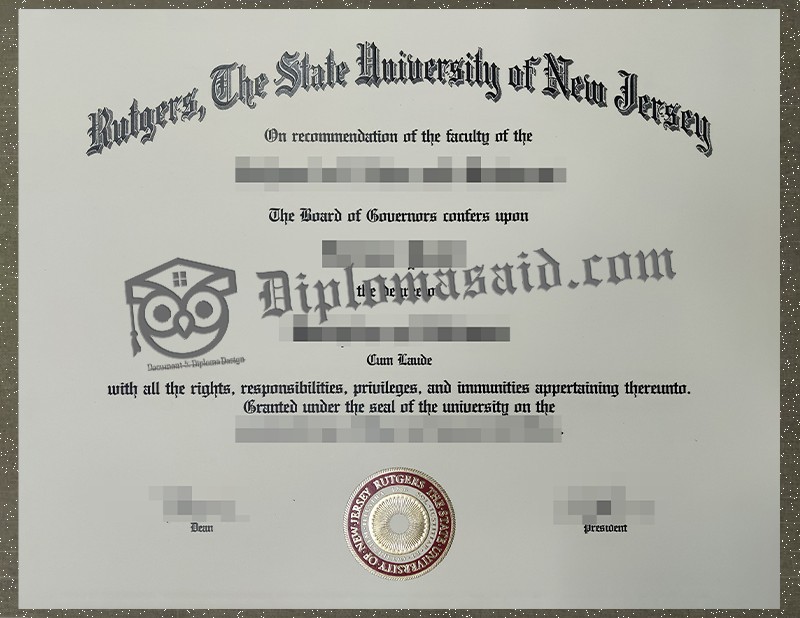
Rutgers University maintains a library system comprising more than 20 branches, with a collection of over 4 million print books and subscriptions to tens of thousands of electronic journals and multidisciplinary databases; its specialized collections in medicine and the humanities are particularly extensive. The main library is equipped with 24-hour study areas, group discussion rooms, and multimedia spaces to support round-the-clock learning. The library also provides services such as document delivery and search guidance, offering comprehensive academic support for research and coursework. Making the Leap to a Rutgers University Diploma
Amenities Near Campus
The main campus is adjacent to downtown New Brunswick, with a wide range of amenities—including international restaurants, supermarkets, banks, and cultural and entertainment venues—all within walking distance. The free on-campus shuttle system serves all campuses with frequent departures for convenient commuting, and the “Knight Mover” provides free late-night transportation to ensure safe travel. Students can reach Manhattan, New York, in 40 minutes via intercity rail, allowing them to easily access urban culture and professional resources while enjoying both the tranquility of campus life and the conveniences of a major city.