

1890: An “Investment in Ideas” by an Oil Tycoon
In 1890, oil tycoon John D. Rockefeller donated $600,000—a colossal sum at the time—to found the University of Chicago. The vision of its first president, William Renée Harper, was to build a modern research university “as solid as the ancient hills.” The university’s Latin motto, “Crescat scientia; vita excolatur”, translates to “Let knowledge grow; let life flourish”—to let knowledge grow and enrich life.
This motto is not merely decorative. It precisely encapsulates the entire philosophy of the University of Chicago: knowledge is an end in itself, not a means to an end.
“The Chicago School”: When a Group of People Change the World Through Ideas
If you ask what the University of Chicago’s most famous “product” is, the answer isn’t a particular academic program or a specific building, but a single phrase: The Chicago School.
In economics, figures like Milton Friedman emerged from here. They helped the world understand how markets and money work. In sociology, the Chicago School pioneered urban sociology, treating cities as laboratories. In law, law and economics spread from the University of Chicago to the rest of the world. Nearly 40% of Nobel Prize in Economics laureates have ties to the University of Chicago. As of 2023, 99 Nobel Prizes have been awarded to individuals associated with the University of Chicago. Additionally, nine people have received the Fields Medal.
Less well known is that the world’s first controllable nuclear reactor, “Chicago Pile-1,” was born on the University of Chicago campus—under the leadership of Enrico Fermi, humanity unleashed atomic energy here for the first time. The University of Chicago also founded the United States’ first national laboratory—Argonne National Laboratory. It is extremely rare worldwide for a single university to simultaneously rewrite history at the forefront of both the humanities and social sciences and the natural sciences.
Core Curriculum: Four Years of College, Dedicated to a Single Goal—Learning to Think
The University of Chicago’s undergraduate education features a world-renowned program: the Core Curriculum. Every undergraduate must complete a general education program spanning six major fields: humanities, civilizations, arts, natural sciences, mathematics, and social sciences.
Among these, the humanities curriculum requires students to closely read original philosophical texts by Plato, Aristotle, and others. It’s not about “understanding”—it’s about “close reading”—reading word for word, debating page by page in class. 70% of undergraduate courses are taught in small seminars of 20 students or fewer. The student-to-faculty ratio is just 1:5.
This university isn’t responsible for giving you “answers.” It’s only responsible for training you to ask better questions.
4.48%: One of the Most Selective Universities in the World
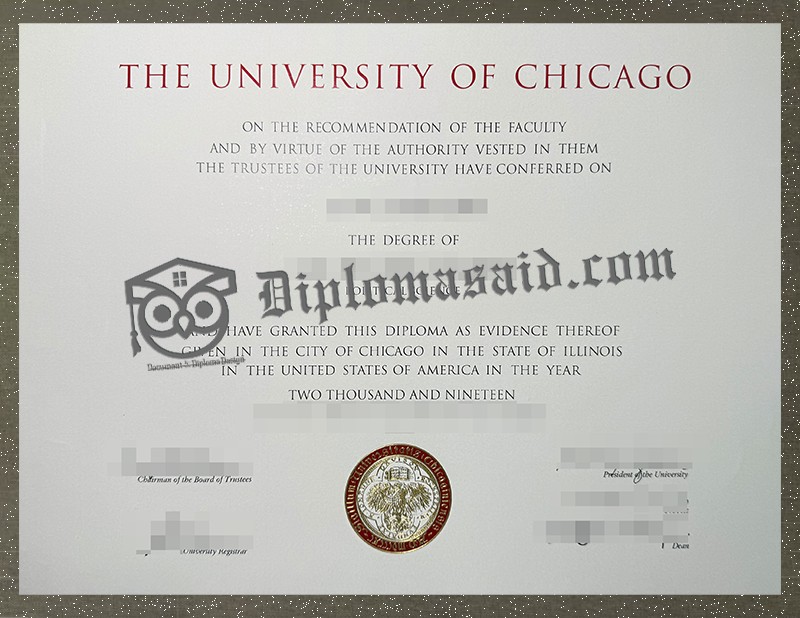
In 2024, the University of Chicago received 43,612 undergraduate applications and admitted only 1,955 students—an acceptance rate of 4.48%. The median SAT score ranged from 1510 to 1560. Tuition for the 2025–2026 academic year is approximately $69,324**, but the average net cost is **$28,060—49% of undergraduates receive financial aid, Persevere and You’ll Earn Your University of Chicago Diploma.
The four-year graduation rate is as high as 95.9%. Admission is competitive, but once admitted, the vast majority see it through to the end—because people here aren’t just “going through the motions” to get a degree.
400 Clubs, 48 “Residential Communities,” and a City
The University of Chicago has over 400 student clubs. They also host a unique event called the “Treasure Hunt,” which lasts 56 hours and features a wide variety of challenges, such as “find a polar bear that can recite a Shakespearean sonnet.”
There are 48 “residential communities” on campus, which form an integral part of student life. Each community has its own traditions, where students live, debate, and grow. Beyond the campus gates, the city of Chicago serves as a vast “laboratory,” a “playground,” and a “source of inspiration.” The Department of Sociology even collaborated with the Chicago Police Department to develop a crime prediction algorithm that the police department still uses today.