

The University of Cologne (Universität zu Köln, abbreviated as UzK, English: University of Cologne) is a long-established and large-scale public research university in Germany. It is located in Cologne, the fourth largest city in Germany and the largest city in North Rhine-Westphalia. The University of Cologne is a member of the German U15 University Union and the Coimbra Group, and occupies an important position in the global higher education field by virtue of its excellent academic strength and profound cultural heritage.
A long historical legacy
The University of Cologne is one of the oldest universities in the German-speaking world. Founded in 1388, it is the second oldest university in Germany after the University of Heidelberg (1386).
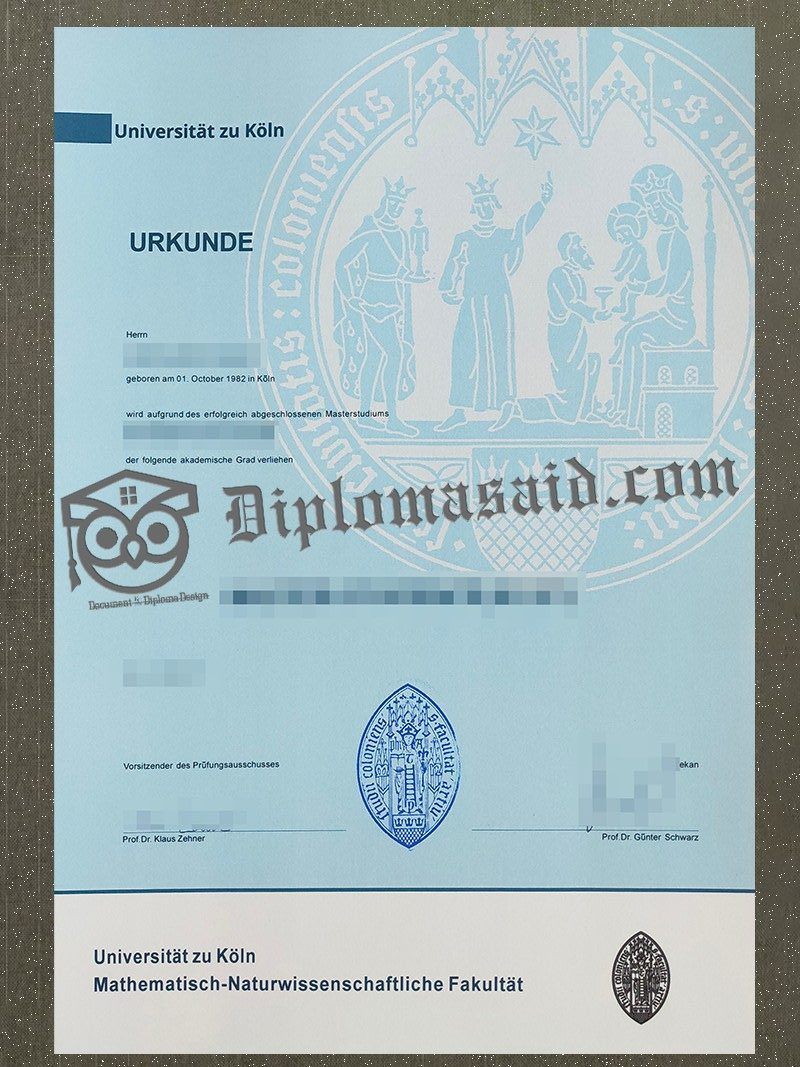
However, the history of the University of Cologne has not been a smooth one: in 1798, during the French occupation, the old university was closed down. The present-day University of Cologne was rebuilt in 1919 by the citizens of Cologne on the basis of a commercial college founded in 1901. After the reconstruction, it grew rapidly and in only six years became the second largest university in Germany at the time. The Recognition of Universität zu Köln Urkunde in Europe
Academic excellence
Comprehensive range of disciplines
As one of the largest comprehensive universities in Germany, the University of Cologne is characterized by its wide range of disciplines. The university offers a mix of arts and sciences, with no engineering programs.
The University of Cologne currently has six faculties, including:
- Faculty of Economics, Management and Social Sciences
- Faculty of Law
- Faculty of Medicine
- Faculty of Philosophy
- Faculty of Mathematical and Natural Sciences
- College of Arts and Humanities
Top Ace Majors
The University of Cologne’s Economics and Law are well known in Germany and have long been in the top three in Germany. The Faculty of Economics is one of the largest in Germany.
In addition, the University of Cologne’s medical school is equally strong, with its life sciences field ranked third in Germany in the 2017 Nature Index ranking. The university has the Max Planck Institute for Metabolism and the Institute for the Biology of Aging in the field of cancer and aging research.
Strong research capabilities
The University of Cologne is one of the top research universities in Germany and has been very successful in obtaining third-party research funding. As a key player in Germany’s “Strategy of Excellence”, the University of Cologne has five clusters of excellence. Its research character is also reflected in nine key profile areas as well as numerous collaborative research centers and graduate schools. To date, 11 Leibniz Prize winners and 8 Alexander von Humboldt Professors have been recognized.
Ideal for international students
Large student body
The University of Cologne is one of the largest universities in Germany in terms of student numbers, with over 50,000 students enrolled. The proportion of international students is around 14%.
Attractive policy
Like most public universities in Germany, the University of Cologne charges very low tuition fees. Students mainly pay a social contribution fee each semester, which includes a semester transportation ticket, which significantly reduces the cost of studying.
Excellent location
Cologne is an ancient Roman city with a history of more than 2,000 years and is located at the heart of the European transportation network. The city has many cultural monuments, the most famous of which is the Cologne Cathedral.
Cologne is also the economic center of North Rhine-Westphalia and is home to many world-renowned research institutes.