

Academic Structure and Degree Programs
As part of its transformation, Lüneburg University has established a distinctive three-college structure designed to provide flexible and cutting-edge education. The Undergraduate College is dedicated to undergraduate education and employs an innovative model combining majors and minors; the Graduate School focuses on master’s and doctoral programs, offering multiple advanced courses, including the world’s first MBA in Corporate Sustainability Management; the Professional School is dedicated to continuing education, offering non-traditional degree programs. Currently, the university offers programs in four major disciplinary areas—Education, Culture, Sustainability, and Economics—covering more than 30 specializations ranging from Business Economics to Environmental Science.
Teaching Models and Curriculum Innovation
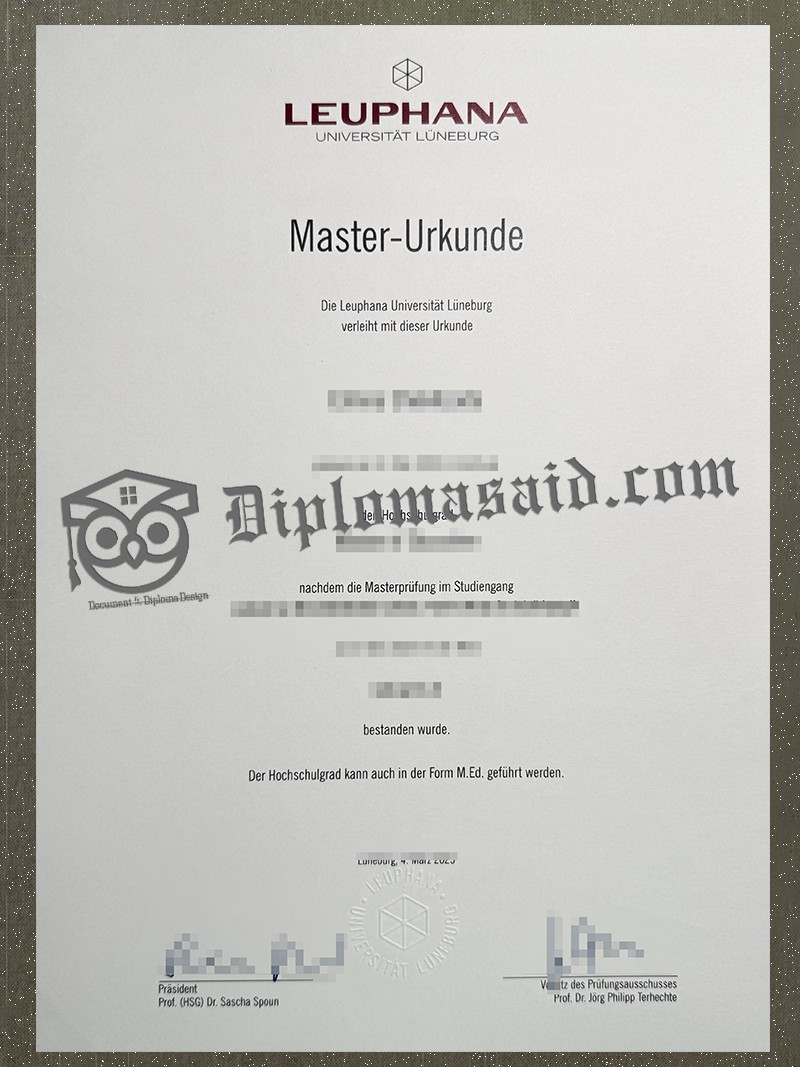
Leuphana is renowned for its pioneering “Major-Minor Model”—students are required to select a minor in addition to their major, combining in-depth disciplinary knowledge with an interdisciplinary perspective. All incoming undergraduate students must complete the one-semester “Leuphana Semester,” an interdisciplinary foundational learning phase. In the summer semester of 2026, the university launched the “Minor in Artificial Intelligence,” taught entirely in English. The first cohort of 35 students was selected from over 400 applicants. The program aims to integrate artificial intelligence as both a subject of study and a teaching tool across all academic levels—from undergraduate to doctoral programs—a pedagogical framework that is the first of its kind in Germany. Leuphana Universität Lüneburg Urkunde as a “Secure Job”?
Does a Leuphana University degree still guarantee a secure job?
A Leuphana University degree does not guarantee a job, but it does provide graduates with a strong competitive edge.
- Advantage 1: Extremely high employment rate: The university’s graduates are exceptionally employable; for example, alumni from programs such as the Master’s in “Management and Data Science” have successfully secured positions at leading global companies.
- Advantage 2: Comprehensive Career Support: The university operates a dedicated Career Service, offering exclusive job listings, career counseling, and a wealth of opportunities for university-industry collaboration.
Simply put, this degree is a highly valuable “key” that can help you unlock many doors of opportunity, but whether you ultimately secure a job depends on your personal abilities and career planning.
Campus Location and Transportation
The University of Lüneburg is located in Lüneburg, Lower Saxony, Germany—a historic city with a population of approximately 70,000 that was once renowned for its salt industry (and is often referred to as the “Salt City”). Lüneburg is situated within the Hamburg metropolitan area, just about 45 kilometers from Hamburg, Germany’s second-largest city, and offers excellent transportation links. This unique location allows students to enjoy the peaceful, safe, and relatively affordable academic atmosphere of a small town while having easy access to the rich cultural resources, multinational corporations, and vast job market of the international metropolis of Hamburg.
Sustainability and the Green Campus
Lüneburg embraces sustainability as a core principle. The campus has been climate-neutral since 2014. The Central Building on the main campus, designed by renowned architect Daniel Libeskind and officially opened in 2017, has become a new landmark for the city of Lüneburg. Situated on the site of a former military barracks, the building itself serves as a critical reflection on the campus’s history.