

The history of Esslingen University of Applied Sciences dates back to 1868. At that time, a department for training mechanical engineers was established within the Royal Stuttgart School of Architecture, which served as the precursor to today’s Esslingen University. In 1914, the institution relocated to the city of Esslingen on the banks of the Neckar River and was renamed the “Royal Württemberg School of Mechanical Engineering.” In 1971, following reforms to the German higher education system, the institution was officially transformed into a University of Applied Sciences (Fachhochschule) and adopted its current name in 2006.
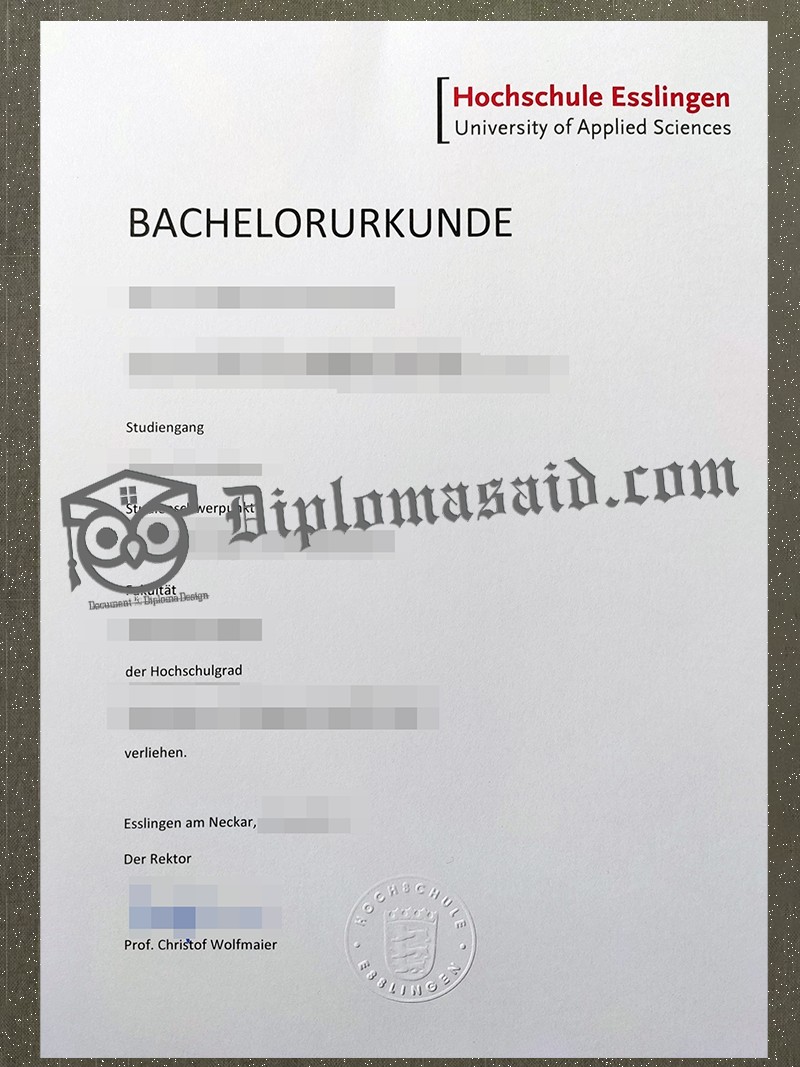
Throughout its more than 150-year history, the university has consistently upheld the core philosophy of “practice-oriented, industry-focused”. Even amidst the upheavals of two world wars and industrial transformation, Esslingen never ceased its mission of supplying highly qualified engineering professionals to the industrial regions of southern Germany. Today, this rich historical legacy is encapsulated in every Hochschule Esslingen Urkunde, serving as the most trusted academic endorsement for graduates’ professional careers. Guide to Every Pathway to Earning a German University Degree
The Heart of the City: Esslingen’s Transportation, Economy, and Culture
Hochschule Esslingen is located in Esslingen, Baden-Württemberg. This medium-sized city of approximately 90,000 residents lies adjacent to the state capital, Stuttgart. From the university, it takes just 15 minutes by S-Bahn to reach Stuttgart city center, and Stuttgart Airport is only about 20 minutes away by car. With a semester ticket, students can ride public transportation throughout the greater Stuttgart area for free, making commuting extremely convenient.
Economically, Esslingen and its surrounding area constitute one of Germany’s leading industrial clusters. Global automotive industry leaders—including Mercedes-Benz, Porsche, and Bosch—all have headquarters or key R&D centers within a 30-minute commute. The city itself is also home to the global headquarters of the Kärcher cleaning technology group. This strong industrial atmosphere provides students with abundant internship and part-time job opportunities, and also ensures a wide range of career options after graduation.
Culturally, Esslingen boasts a well-preserved medieval old town, where narrow cobblestone streets, historic half-timbered houses, and a castle on the banks of the Neckar River create a picturesque setting for the campus. The annual “Esslingen City Festival” in the summer and the Christmas market during the holiday season offer international students an excellent opportunity to experience traditional South German culture.
Green Campus: A Leader in Sustainable Development
Esslingen University of Applied Sciences is a pioneer in green campus development in Germany. All three of its campuses feature high-standard energy-efficient and eco-friendly designs. For example, some buildings on the Hilltop Campus utilize ground-source heat pumps and solar photovoltaic systems, significantly reducing energy consumption. At the Frändel Street Campus, the university employs a rainwater harvesting system for green space irrigation and has installed energy-efficient lighting and smart building management systems.
In terms of teaching and research, the university offers bachelor’s and master’s programs in sustainable energy and building technology, and collaborates with regional companies on cutting-edge research in areas such as new energy and the circular economy. Student-led initiatives like “Green Office” and “Zero-Waste Campus” have also fostered a strong culture of environmental awareness. For international students interested in sustainability issues, Esslingen is an ideal choice for higher education.
Student Life: Housing, Dining, and Campus Amenities
Regarding housing, while the university does not directly operate dormitories, the Stuttgart Student Services Center offers affordable student apartments in Esslingen. Monthly rent for a studio apartment typically ranges from 350 to 500 euros, including basic furniture and internet access. The university’s International Center provides free housing information, assistance with finding private apartments or shared housing (WG), and legal advice on renting. There is a wide variety of dining options on campus. The student cafeteria (Mensa) at the Fländerstraße campus offers a range of affordable set meals (approximately 2.5 to 4.5 euros), with plenty of vegetarian options. The Berg campus has a snack bar, and the Göppingen campus features Café Campus, run by the student association. The surrounding Old Town is lined with restaurants, making daily food expenses manageable.